
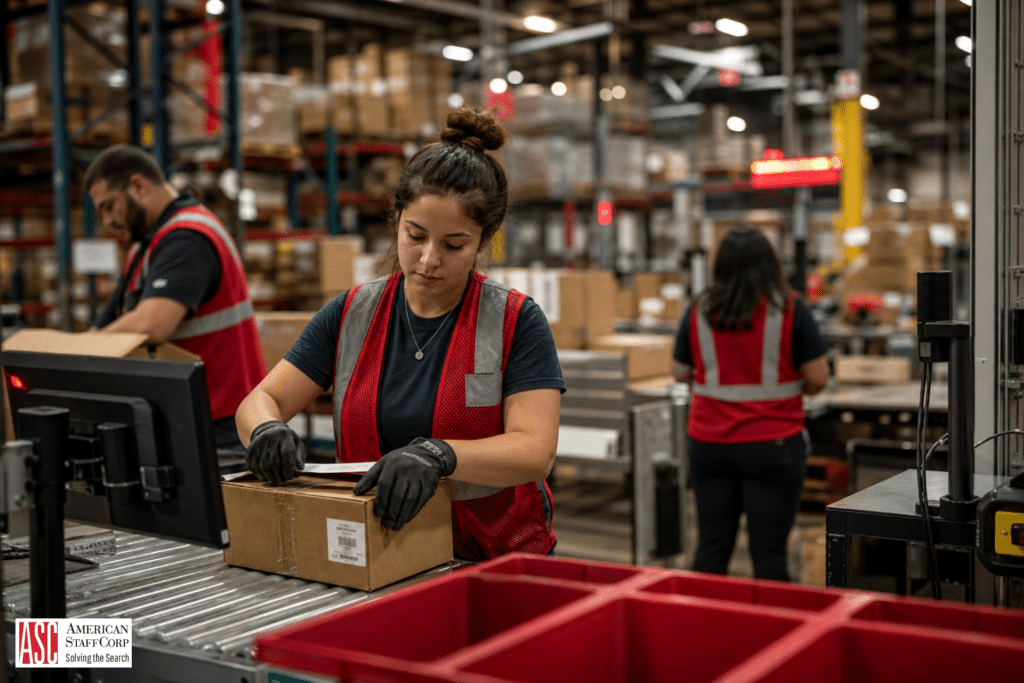
Warehouse staffing in Oklahoma City and Tulsa can become especially challenging when order volume rises quickly. Distribution centers need enough workers to keep receiving, picking, packing and shipping moving without sacrificing accuracy, safety or service levels.
For warehouse managers and operations leaders, the goal is not simply adding headcount. It is building enough workforce flexibility to respond when demand changes without carrying unnecessary labor costs when volume slows.
American StaffCorp supports employers through manufacturing and industrial staffing solutions designed for changing production and distribution needs.
Forecast Warehouse Staffing Needs Before Volume Spikes
Historical order volume can help you anticipate when additional coverage will be necessary. Review previous peak periods and identify which shifts and positions experienced the most pressure.
Focus on roles such as:
-
Pickers and packers
-
Forklift operators
-
Shipping and receiving employees
-
Material handlers
-
Inventory and warehouse support staff
Compare anticipated order volume with current shift capacity. This gives you time to recruit and train workers before an increase becomes an emergency.
Build Flexibility Into Your Staffing Plan
Warehouse demand does not always stay consistent throughout the year. Hiring permanently for every temporary increase can create overstaffing when business slows.
Temporary and flexible staffing allow employers to increase coverage during peak periods while maintaining greater control over long-term headcount.
American StaffCorp’s employer staffing services can help companies adjust workforce capacity around seasonal demand, customer requirements and unexpected vacancies.
Prepare for Attendance and Turnover Challenges
Warehouse positions can experience attendance and turnover problems, particularly during periods when employees are working longer shifts or managing physically demanding workloads.
Instead of waiting for an absence to disrupt operations, develop backup coverage in advance. A staffing partner can help maintain access to screened workers who understand the schedule, physical requirements and expectations of warehouse environments.
Clear communication before placement is also critical. Candidates should understand shift times, overtime expectations, job duties and workplace conditions before accepting an assignment.
Prioritize Fast, Consistent Safety Training
Adding workers quickly should never mean reducing safety expectations.
Create a standardized onboarding process that covers personal protective equipment, equipment rules, lifting procedures, emergency protocols and role-specific responsibilities. New workers should receive the same core information regardless of which supervisor or shift handles orientation.
Employers with broader industrial workforce needs can also explore American StaffCorp’s skilled labor staffing services.
Maintain a Ready Bench of Screened Workers
One of the most effective ways to prepare for volume increases is to recruit before positions become urgent.
Work with your staffing partner to identify recurring warehouse roles, required skills, preferred availability and expected peak periods. Keeping a pipeline of screened candidates can reduce the time between recognizing a staffing need and getting qualified workers on the floor.
Keep Warehouse Operations Moving During Peak Demand
Order spikes do not have to lead automatically to excessive overtime, rushed hiring or missed shipping deadlines. Forecasting workforce needs, strengthening onboarding and maintaining flexible coverage can help Oklahoma City and Tulsa warehouses respond more effectively.
American StaffCorp helps Oklahoma employers find qualified workers for warehouse, manufacturing and industrial environments.
Request an employee to discuss your upcoming warehouse staffing needs.
